Share


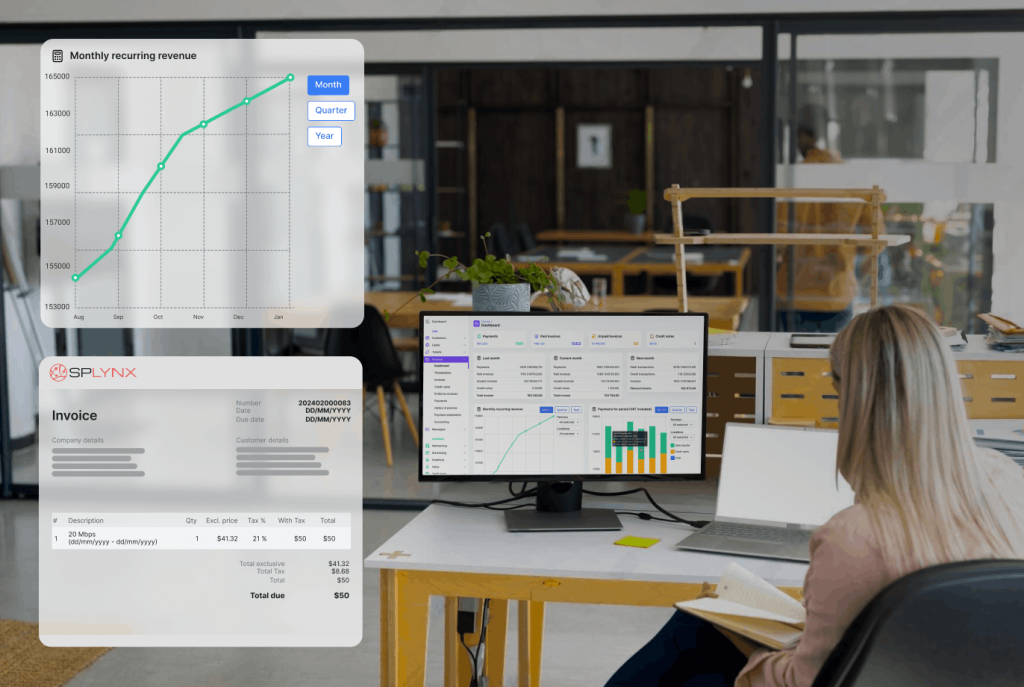
Your subscriber list is growing. Your support tickets are multiplying faster. And somewhere between the spreadsheets and the manual invoice runs, revenue is quietly slipping through the cracks.
The telecom industry loses over $30 billion annually to revenue leakage from billing inaccuracies and disconnected systems. For small and mid-sized ISPs, the damage is proportionally worse because there’s less margin to absorb it. With 1,630 ISPs now operating in the U.S. as of 2026 and subscriber counts climbing steadily, the billing system you started with probably wasn’t built for what you’re running today.
This article breaks down five warning signs that your ISP billing software can’t keep up, and what to do about each one.
Key Takeaways
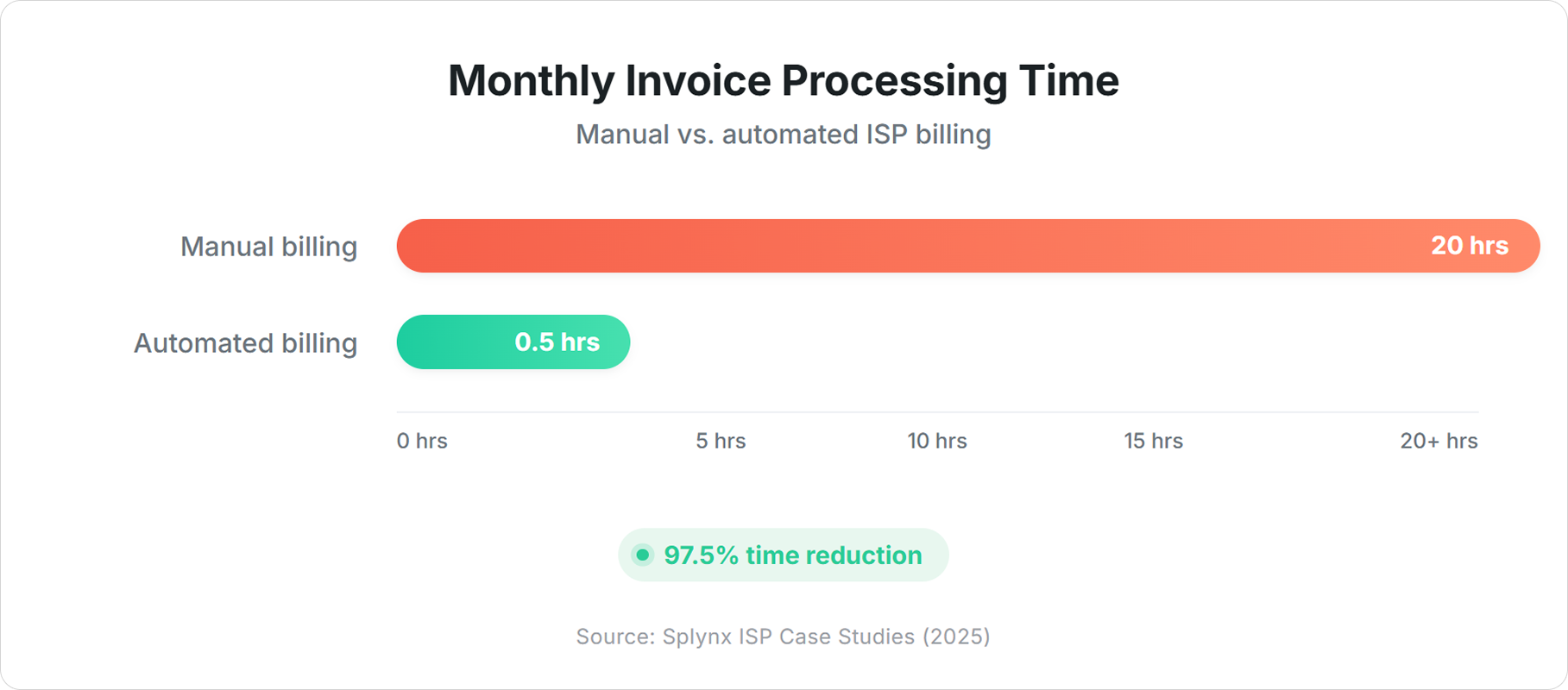
ISPs using manual or semi-automated billing systems routinely burn 20 or more hours on monthly invoice processing alone. When month-end billing takes days instead of minutes, it signals that your ISP billing software has fallen behind your subscriber growth.
This isn’t just a productivity problem. It’s a scaling bottleneck. In our work with regional ISPs, we’ve seen billing teams spend the equivalent of one full-time employee’s week just generating invoices and reconciling payments each month. That’s time not spent on network expansion or customer retention strategies that actually grow revenue.
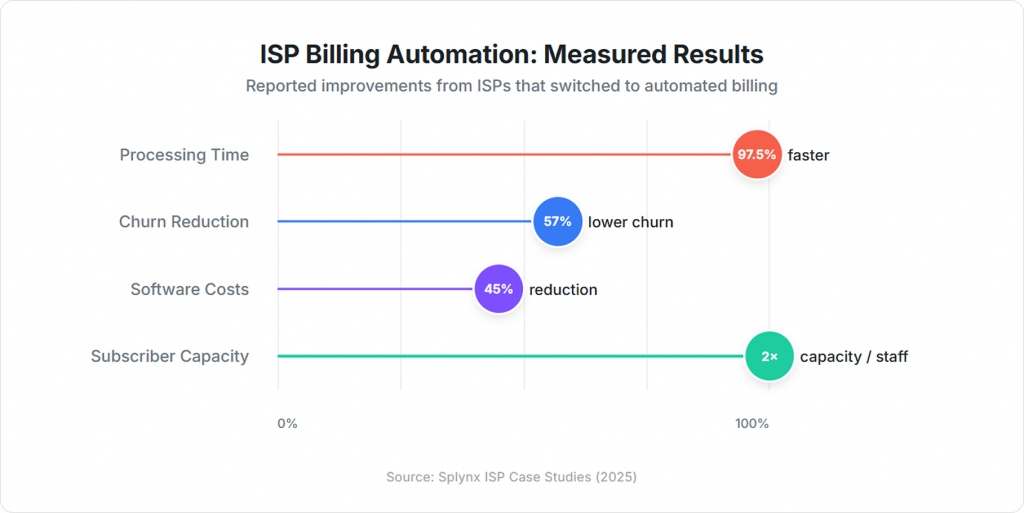
Consider what happens as you add subscribers. A billing system that worked for 500 accounts starts breaking at 2,000. The math gets worse from there. techCONNECT, a regional ISP, reduced monthly invoice processing from over 20 hours to approximately 30 minutes after switching to automated billing. Easyweb Internet reported similar results, compressing their month-end cycle from days to a single hour.
If your billing team dreads the last week of every month, that’s your first sign.
Over 80% of telecom billing audits reveal overcharges and errors, according to a 2026 analysis published by Symphona citing TimelyBill data. If you haven’t audited your billing accuracy recently, there’s a strong chance your ISP is losing revenue to silent leakage that never shows up on a dashboard.
Revenue leakage in telecom isn’t dramatic. It’s death by a thousand paper cuts. A $0.03 rating inconsistency across millions of billing events compounds into six- or seven-figure losses over time. The average telecom operator loses approximately 9% of yearly income through billing inaccuracies, according to Symphona’s 2026 analysis.
Three categories account for most billing leakage in ISPs:
Modern ISP billing software includes automated revenue assurance checks that flag discrepancies before invoices go out. When we’ve audited billing systems for ISPs in the 1,000-5,000 subscriber range, the most common finding is unbilled equipment rentals, sometimes accounting for 3-5% of potential monthly revenue. If your system doesn’t catch these gaps automatically, that’s your second sign.
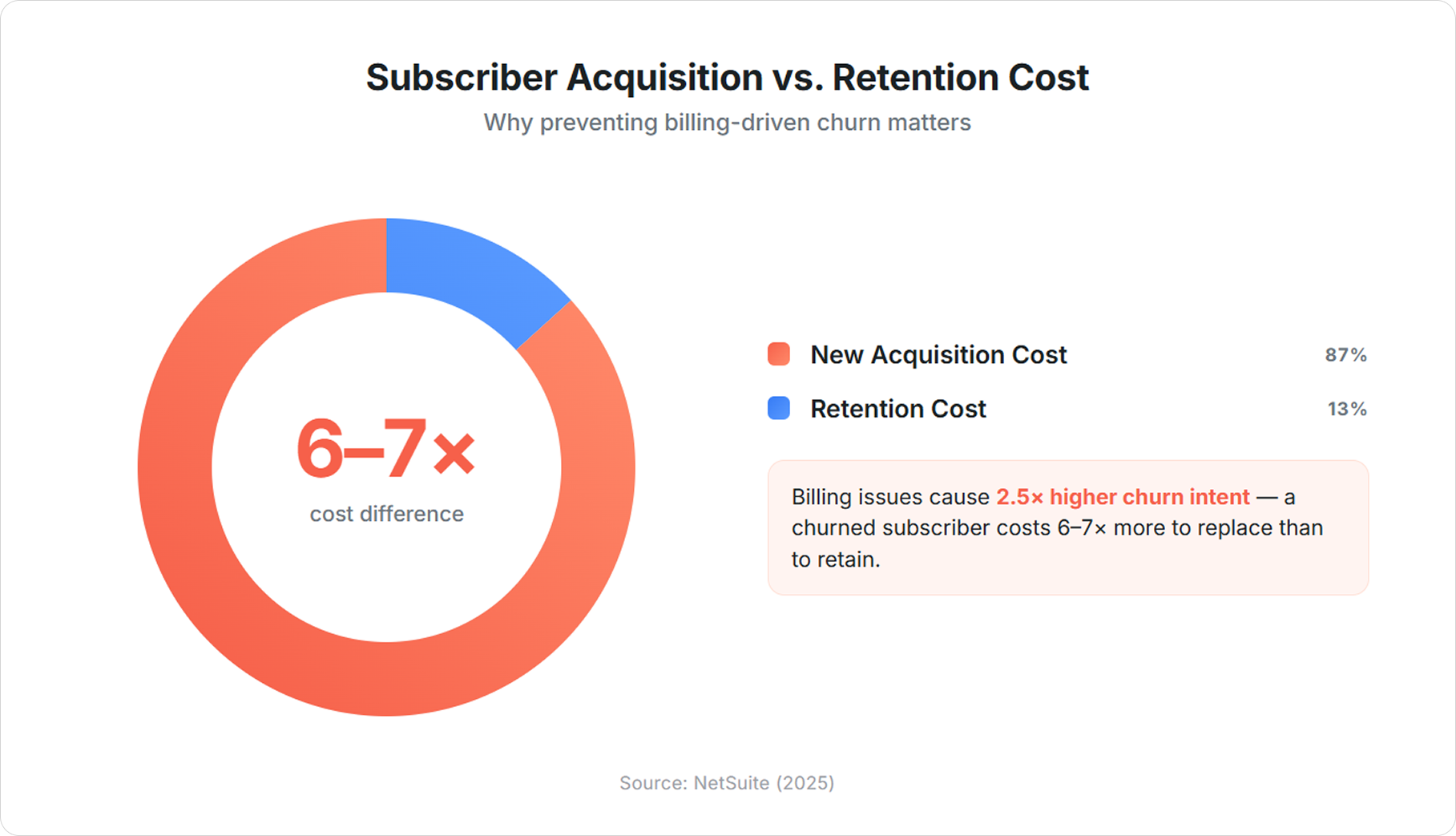
Customers who experience billing problems intend to leave at 2.5 times the rate of those without billing issues. For ISPs already operating on thin margins, billing-driven churn is the most preventable form of revenue loss, and the most expensive to ignore.
Annual churn rates in telecom range from 20% to 50%, and acquiring a new subscriber costs 6-7 times more than retaining an existing one (Sonar Software, 2025). The FCC’s 2025 Broadband Deployment Report confirms that competition among ISPs is intensifying as fiber and fixed wireless expand into previously underserved markets. Yet many ISPs still send confusing invoices, lack self-service payment portals, and make it difficult for customers to understand what they’re paying for.
The fix isn’t always a lower price. It’s a clearer bill. techCONNECT decreased churn from 7% to 3% after implementing automated billing with a customer self-service portal, while simultaneously achieving 30% year-on-year monthly recurring revenue growth (Splynx, 2025).
When your customers call support to ask “why is my bill different this month?” more than once a quarter, your billing system is creating churn instead of preventing it. For a deeper look at reducing support volume, see our guide on automating ISP customer communications.
The global telecom billing software market reached $4.8 billion in 2025 and is projected to hit $12.7 billion by 2034, growing at an 11.2% CAGR. That growth is driven by one thing: ISPs need billing systems that can handle the complexity of modern service offerings.
If launching a new plan takes your team a week of manual configuration, or if bundling internet with VoIP or IPTV requires workarounds in your current system, your billing software is limiting your revenue opportunities.
Ask your billing team three questions:
In 2026, 85% of telecom operators are prioritizing AI-driven tools for operational efficiency. Meanwhile, many smaller ISPs still export data to Excel, manually reconcile accounts, and paste customer information between disconnected systems. The gap between available technology and daily operations is the clearest sign that your billing setup has been outgrown.
Workarounds are the silent tax on growth. They look functional until they aren’t. We’ve seen ISPs where a single billing coordinator’s personal spreadsheet was the only record of promotional pricing for 300+ accounts. When that person took a two-week vacation, billing ran without the adjustments and triggered a wave of customer complaints. A payment reconciliation process that requires copying data between two systems introduces errors every single time.
bitCONNECT, a growing ISP, reported that after switching to purpose-built ISP billing software, they could potentially double customer capacity while maintaining current staffing levels. Another example, AU Wireless achieved a 50% reduction in software costs through the same transition.
That’s not an incremental improvement. It’s what happens when you replace workarounds with a system that was built for the job.
Not every ISP needs the same billing platform, but every ISP billing software upgrade should address five core capabilities:
The telecom billing software market’s 11.2% CAGR reflects the reality that ISPs of all sizes are investing in these capabilities (HTF Market Insights, 2025). The longer you wait, the more revenue leaks out the bottom.
| Capability | Manual/Spreadsheet Billing | Modern ISP Billing Software |
|---|---|---|
| Monthly invoice processing | 20+ hours | Under 1 hour |
| Billing error detection | After customer complaint | Automated pre-invoice checks |
| New plan setup | Days to weeks | Under 1 hour |
| Revenue leakage visibility | None until audit | Real-time dashboards |
| Customer self-service | None | Portal with payments, plan changes |
| Subscriber scaling limit | ~500-1,000 per staff member | 2,000+ per staff member |
| Mixed billing (flat + metered) | Requires manual workarounds | Native support |
If you’re exploring options, our ISP billing software comparison guide covers the leading platforms by subscriber size and feature set.
If you recognized your ISP in any of these five signs, you’re not alone. The gap between where your business is today and what your billing system was built to handle is the most common growth constraint for ISPs under 10,000 subscribers. If you’re evaluating whether Splynx is the right fit, see how we compare to other platforms.
The numbers make the case clearly:
The ISP billing software market exists because this problem is solvable. If you’re ready to evaluate your options, start with our step-by-step guide to migrating ISP billing systems. The question isn’t whether to upgrade. It’s how much revenue you’re willing to lose before you do.
The typical ISP billing software started as a standalone invoicing tool, but modern solutions have evolved into full ISP management suites. Splynx combine billing, network management, CRM, ticketing, and customer management under one roof, eliminating the need to stitch together 5 to 10 disconnected systems just to manage a single subscriber. The global telecom billing software market reached $4.8 billion in 2025 and is growing at 11.2% CAGR (HTF Market Insights, 2025), driven largely by this shift toward full suite platforms.
The average telecom operator loses approximately 9% of yearly income through billing inaccuracies (Symphona, 2026). Industry-wide, this totals over $30 billion annually. For smaller ISPs, even a 1-2% leakage rate on a $2 million annual revenue base means $20,000-$40,000 lost per year.
Billing automation reduces churn by eliminating invoice errors, providing transparent self-service portals, and sending proactive payment reminders. techCONNECT reduced churn from 7% to 3% after automating their billing (Splynx, 2025). Since customers with billing problems are 2.5x more likely to leave, clearer billing directly improves retention.
Upgrade when any of these five signs appear: month-end billing takes more than a few hours, billing errors are discovered after invoices go out, churn exceeds your subscriber growth rate, launching new plans requires workarounds, or your team maintains manual spreadsheets to supplement the system. The U.S. ISP count grew 3.6% in 2026 (IBISWorld, 2026), meaning competitive pressure is intensifying alongside subscriber expectations.
Implementation timelines vary by provider complexity, but most ISP billing platforms can be deployed within 4-12 weeks for small to mid-sized providers. The key factors are data migration from legacy systems, integration with existing network management tools, and staff training. ISPs that plan the migration during a low-growth period experience fewer disruptions.
Splynx Webinar Recap: What’s New in Splynx 6.0
This is the full recording of our recent live training, where we walked through Splynx 6.0, covering everything from AI ...

Field service operations for ISPs webinar – workflows, tools, and real-world results
Explore how leading ISPs handle the entire field service process using Splynx - from scheduling and dispatching to the m...
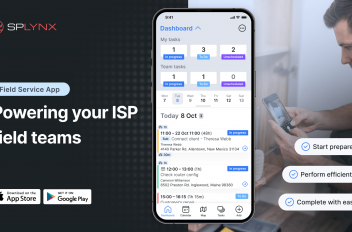
Splynx’s Field Service Mobile App
Today, we’re launching the Splynx Field Service app for iOS and Android, purpose-built to meet ISPs’ unique needs in...
Splynx 5.1 webinar: product & new features overview
This is the full recording of our recent live training where we walked through the latest features and improvements in S...
Automate accounting process for your ISP and save hours of work
See how Splynx can save your accountant hours with out-of-the-box accounting integrations that automatically synchronize...

Thinking about changing software for your ISP? Keep these tips in mind
Transitioning from one ISP software provider to another can be rather challenging. Here's what you need to consider to m...

The power of Splynx ACS (TR-069) for local ISPs
Splynx ACS (TR-069) optimizes the way ISPs operate, interact with clients, and manage their networks.

10 Biggest Nightmares for Local ISPs and How Splynx Solves Them (Insights from 50+ Feedbacks)
How can local ISP business succeed? Here are the biggest pitfalls on over 50 interviews with our clients worldwide.
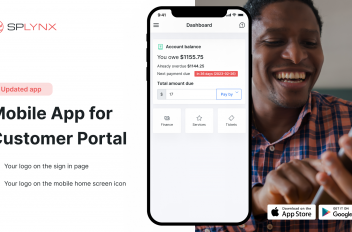
Enhance Your ISP Business with Customer Portal Mobile App
Discover Splynx’s Customer Portal mobile app for ISPs. Enhance your service, boost payments, and set your own branding...
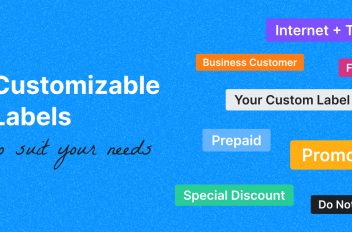
How can WISP boost daily service with Splynx custom tags
Discover how can WISP improve daily customer service with Splynx customizable labels.
Find out how Splynx helps ISPs grow
Learn more