The #1 Powercode Alternative

Splynx vs Powercode: ISP Billing & Management Compared (2026)

Splynx vs Powercode — compare features, pricing, and deployment options for WISP and ISP operators. Find out which platform delivers more value in 2026.

Start free for 15 days No credit card.
No setup fee.
Splynx vs Powercode: ISP Billing & Management Compared (2026)

What does Splynx offer that other platforms don't?

Every ISP platform checks the same boxes. The differences are in adaptability, control, and support that responds when something needs to change.

API-first extensibility
Connect Splynx to your existing tools through ready-made integrations. Need something custom? The API is open and the architecture is modular — build it yourself.
Up to 50% savings on software
Up to 50% lower recurring costs. That's what happens when billing, CRM, inventory, and scheduling stop being four separate line items.
Continuous development
Active development by a team of 30+. Check the changelog — updates aren't quarterly promises, they're shipped code.
Responsive support with fast turnaround
85% of tickets resolved within the hour.
COMPARE

Side-by-side comparison of Splynx and Powercode

Same mission. Very different platforms.

Powercode
BILLING & FINANCE
Recurring (postpaid) billing
True prepaid billing (daily-rate deduction)
Pro-rata / mid-cycle proration
Usage-based billing (data cap + overage)
Data cap enforcement + top-up plans
Yes (throttling after threshold)
VoIP / CDR billing
(VoIP accounts + DID; CDR rating unclear)
Mobile (calls + SMS + data) billing
Automated invoice generation
Automated late fees
Delinquency management & auto-suspend
(reconnection fee exists; full automation unclear)
Credit notes & refund automation
(credit/debit memos)
Contract creation & e-signature
(contracts exist; e-signature not confirmed)
Multi-account / consolidated billing
Reseller / wholesale billing
Multi-jurisdiction tax automation
Yes (tax zones + FCC classifications)
Payment gateways
(17+: Stripe, M-PESA, GoCardless, SEPA, PayFast, Paystack, Moneris, etc.)
(3: Stripe, IPpay/Convergence, ProPay)
ACH / EFT / direct debit
(GoCardless, SEPA, bank integrations)
(NACHA, ACH multi-country)
Accounting integrations
(Xero, QuickBooks, Sage, NetSuite, Zoho)
Financial dashboards (MRR, ARPU, churn, aging)
(60+ reports but no interactive dashboards confirmed)
Built-in report library
Custom report builder
NETWORK MANAGEMENT
Built-in native RADIUS server (standalone)
(RADIUS via BMU/MikroTik integration — not a standalone server)
PPPoE provisioning
IPoE / DHCP provisioning
(via BMU)
Hotspot / captive portal authentication
DHCP Option 82 (MAC-port auth)
Bandwidth management (native)
(BMU — proprietary bandwidth management unit)
MikroTik native integration
(MikroTik as BMU via API)
Non-payer redirect to payment page
(via BMU traffic redirect)
RADIUS failover / redundancy
IPv4 IPAM
(DHCP IP assignment via BMU; full subnet management unclear)
IPv6 IPAM & dual-stack
IPv6 delegated prefix via RADIUS
TR-069 / ACS native CPE remote management
(platform add-on, USD 100-1,000/mo)
Remote firmware OTA updates via ACS
Mass CPE configuration push
CPE self-service reboot via customer portal
LTE / 4G provisioning & billing
(Baicells + Tarana CBRS integration; not generic LTE)
Fair Usage Policy (FUP) automation
(every 5 min)
(usage thresholds with throttling)
Data cap enforcement + throttling
Cambium support
Ubiquiti support
Huawei OLT / GPON
Preseem QoE integration
NetFlow / IPFIX traffic collection
WISPr bandwidth attributes
Multiple PSK per-tenant WPA2 (MDUs)
NETWORK MONITORING
SNMP polling (device health, CPU, memory, clients)
ICMP / Ping monitoring
Network topology / maps
(open-source renderer)
(Google Maps integration, tower-level view)
Network Sites hierarchy (location → equipment → subscribers)
(tower/device association)
Configuration backup & one-click rollback
Device change audit log
Mass customer notification by site
CRM & TICKETING
Unified customer CRM
(customer management without formal CRM module)
Lead management & sales pipeline (stages, funnel)
Self-registration widget (embeddable)
External contract signing (no portal login needed)
Customer self-service portal
Portal: view usage data (daily/monthly)
Portal: open/track support tickets
White-label customer mobile app (native iOS/Android)
Helpdesk / ticketing
Automated inbound email-to-ticket
Canned response templates with variables
Ticket file uploads
Agent collision detection
SLA tracking & reporting
WhatsApp ticketing (native)
SMS notifications
Email: Gmail OAuth integration
Custom fields (with sections & ordering)
Mass email to subscribers
2FA for admin accounts
(app-based, added March 2026)
FIELD OPERATIONS
Visual scheduling (day/week/month views)
Map-based task / job view
GPS turn-by-turn route guidance
Field technician mobile app (native iOS/Android)
(mobile-optimized installer view; native app unclear)
Offline mobile app capability
E-signature capture in field
Digital checklists / work orders
(scheduling + ticketing; no dedicated work order module)
Photo & file documentation from field
Job performance analytics
Google Calendar sync
Kanban (board) view for task workflow
Technician work hours configuration
INVENTORY & PROCUREMENT
Full lifecycle inventory (warehouse → truck → CPE → RMA
Multi-location / multi-warehouse management
Barcode / serial number tracking
(MAC QR scanning; full barcode inventory unclear)
Low-stock threshold alerts
Supplier & purchase order management
Equipment types management
ACS / provisioning-linked inventory
Inventory integrated inside work orders
Equipment API endpoints
(CRUD via REST API)
COGS & inventory reporting
Accounting sync for inventory invoices
API & PLATFORM
REST API
(rate-limited 3 req/sec)
Webhooks
(equipment status, ticket updates)
API authentication
Token + API key
API key + IP whitelist
Official Postman collection
Custom add-on / module framework
On-premise / self-hosted deployment
Managed cloud (SaaS) deployment
(cloud status unclear; historically on-premise)
Free trial
Public pricing
$0.55 - $0.165/sub/mo
(contact sales)
Setup fees

This comparison is published by Splynx. All Powercode data is sourced frompowercode.com, and kb.powercode.com as of April 2026.

FEATURE HIGHLIGHTS

Splynx gives ISPs a modern stack for every layer

Billing, RADIUS, CPE management, CRM, field ops — all native, all integrated. No middleware scripts. No bolted-on workarounds.

Configure every CPE from your desk

Powercode has no TR-069/ACS support — not built-in, not as an add-on, not through a partner integration. When a subscriber's CPE needs a firmware update or a config change, someone drives to the site.

Splynx's native ACS auto-provisions any standards-compliant device on first connection, pushes firmware across your entire fleet in one click, and lets subscribers reboot their own router from the portal. Fewer trucks. More uptime.
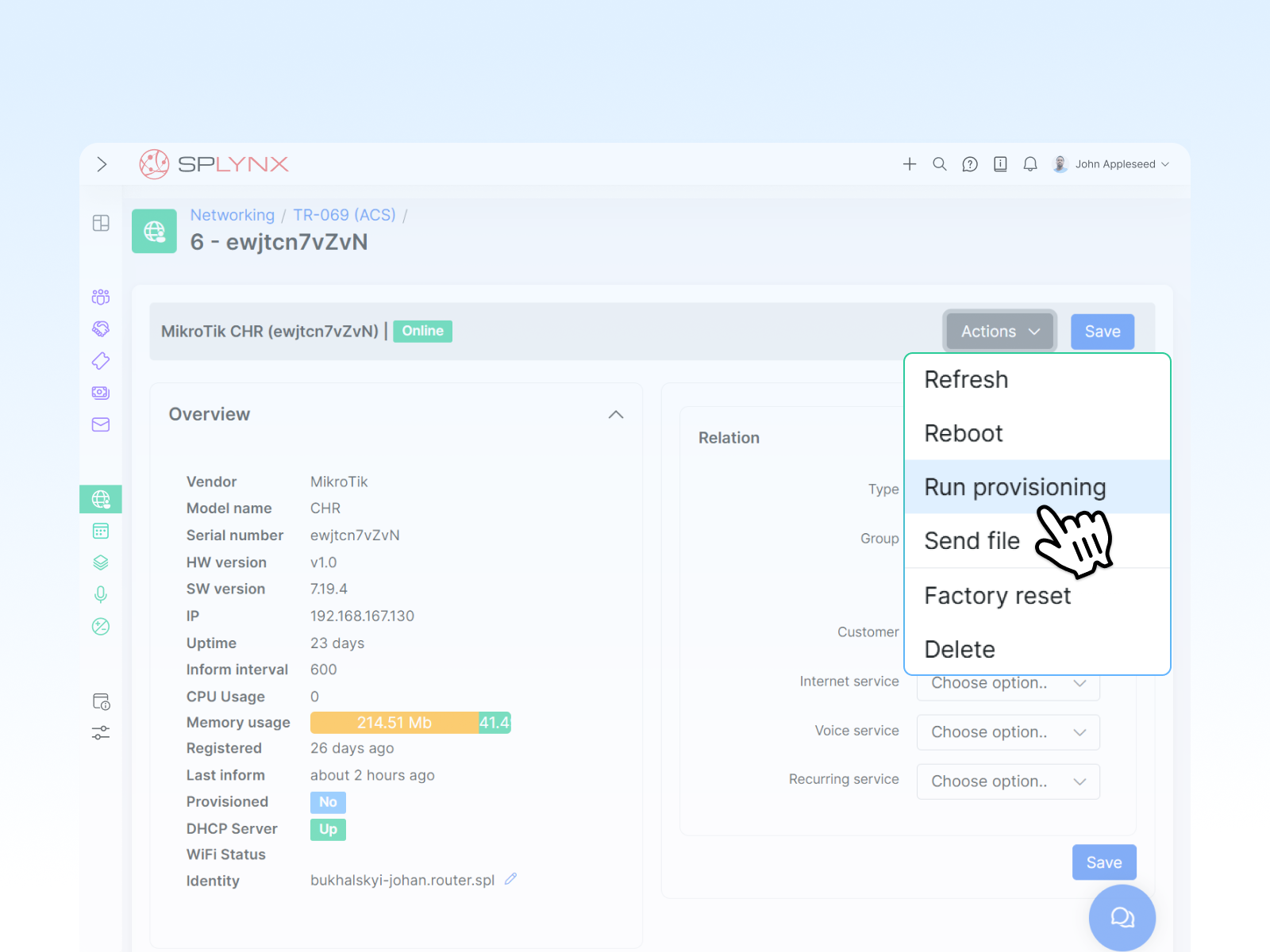
Configure every CPE from your desk

RADIUS that doesn't depend on MikroTik

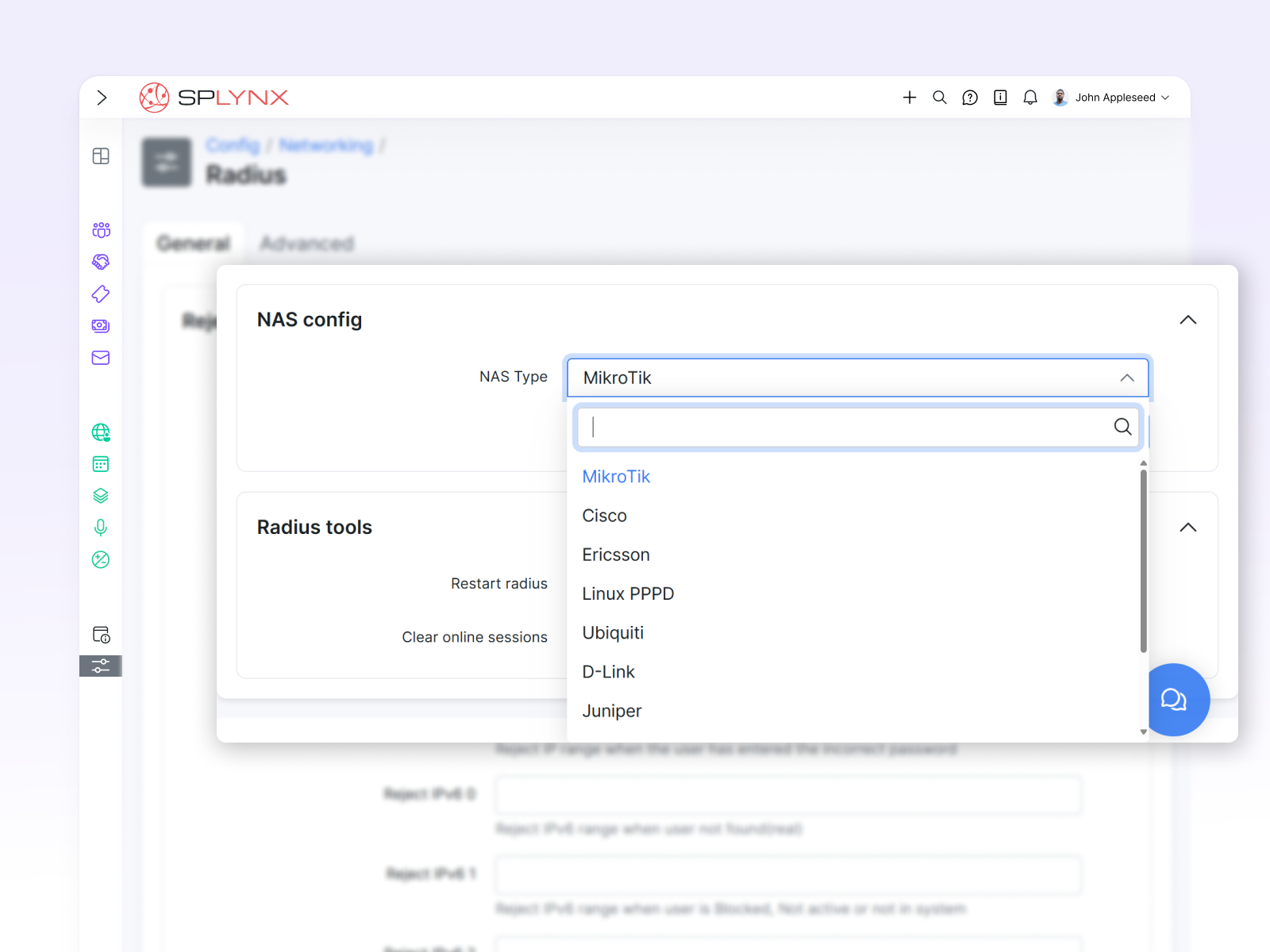
Powercode's BMU (bandwidth management) requires MikroTik hardware or a Virtual BMU appliance. Rate limiting, traffic redirection, and DHCP control work through MikroTik API integration. Other vendors like Ubiquiti, Cisco, Cambium, or Juniper need separate integrations — the BMU layer won't manage bandwidth natively.

Splynx's built-in RADIUS server is vendor-agnostic. PPPoE, IPoE, MAC auth, hotspot, IPv6 delegation — all work with any RADIUS-compatible hardware. No middleware. No vendor lock-in.

RADIUS that doesn't depend on MikroTik

A real CRM, not just a contact list

Powercode tracks customers. Splynx manages the entire subscriber lifecycle — from lead capture through pipeline stages to signed contract.

Built-in lead management with custom stages, self-registration widgets that embed on your website, quote generation, external contract signing, and WhatsApp-native ticketing mean your sales and support teams work from one system. No spreadsheet side-channels. No lost leads.
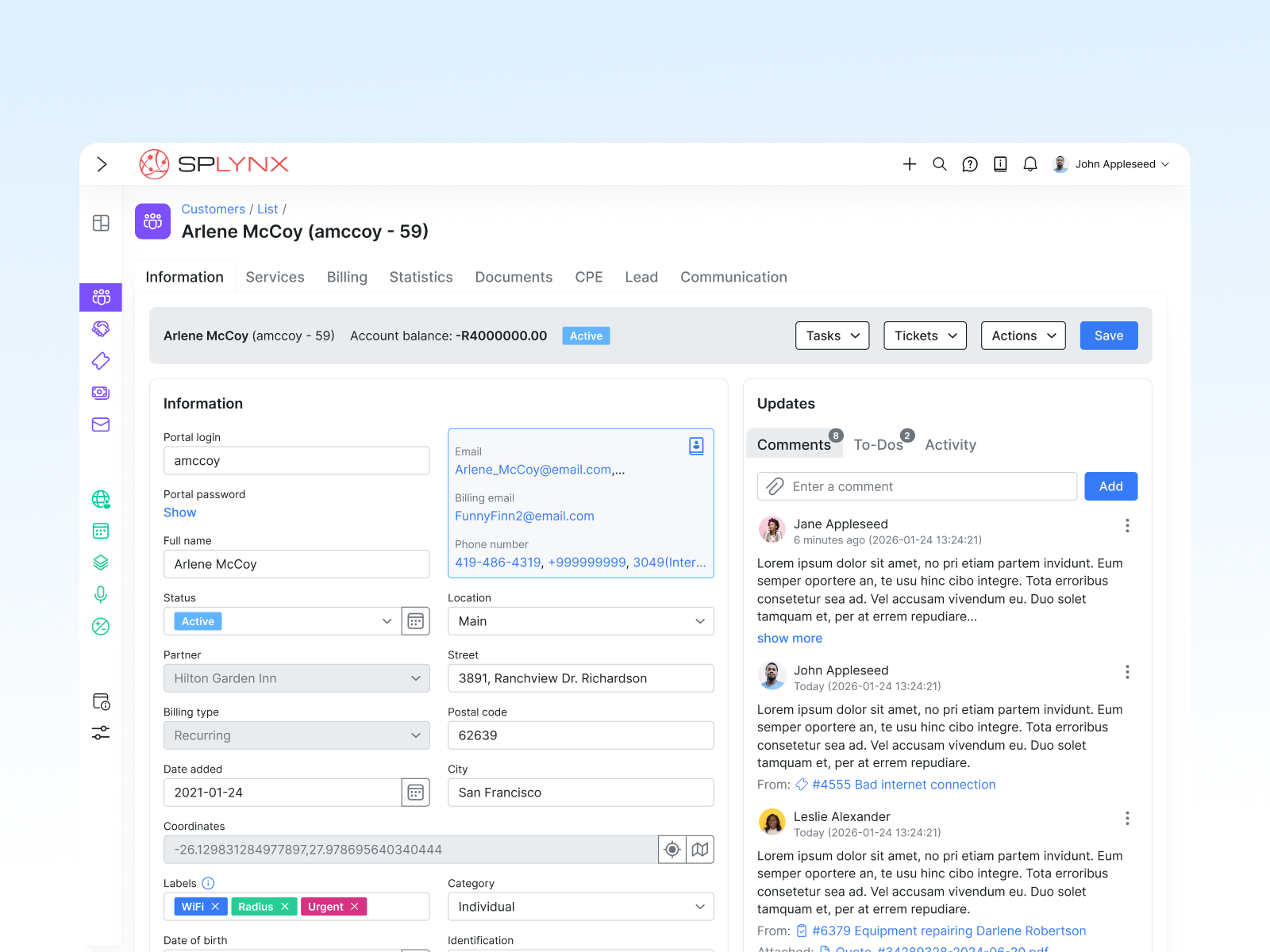
A real CRM, not just a contact list

Bill subscribers on every continent

Powercode connects to 3 payment gateways — Stripe, IPpay, and ProPay — and has no native accounting sync. If your subscribers pay via direct debit in Europe, mobile money in Africa, or bank transfer in Latin America, you're out of luck.

Splynx integrates with 17+ gateways globally — M-PESA, GoCardless, SEPA, PayFast, Paystack, Moneris, and more — plus accounting sync with Xero, QuickBooks, Sage, NetSuite, and Zoho. Your billing stack works wherever your network reaches.
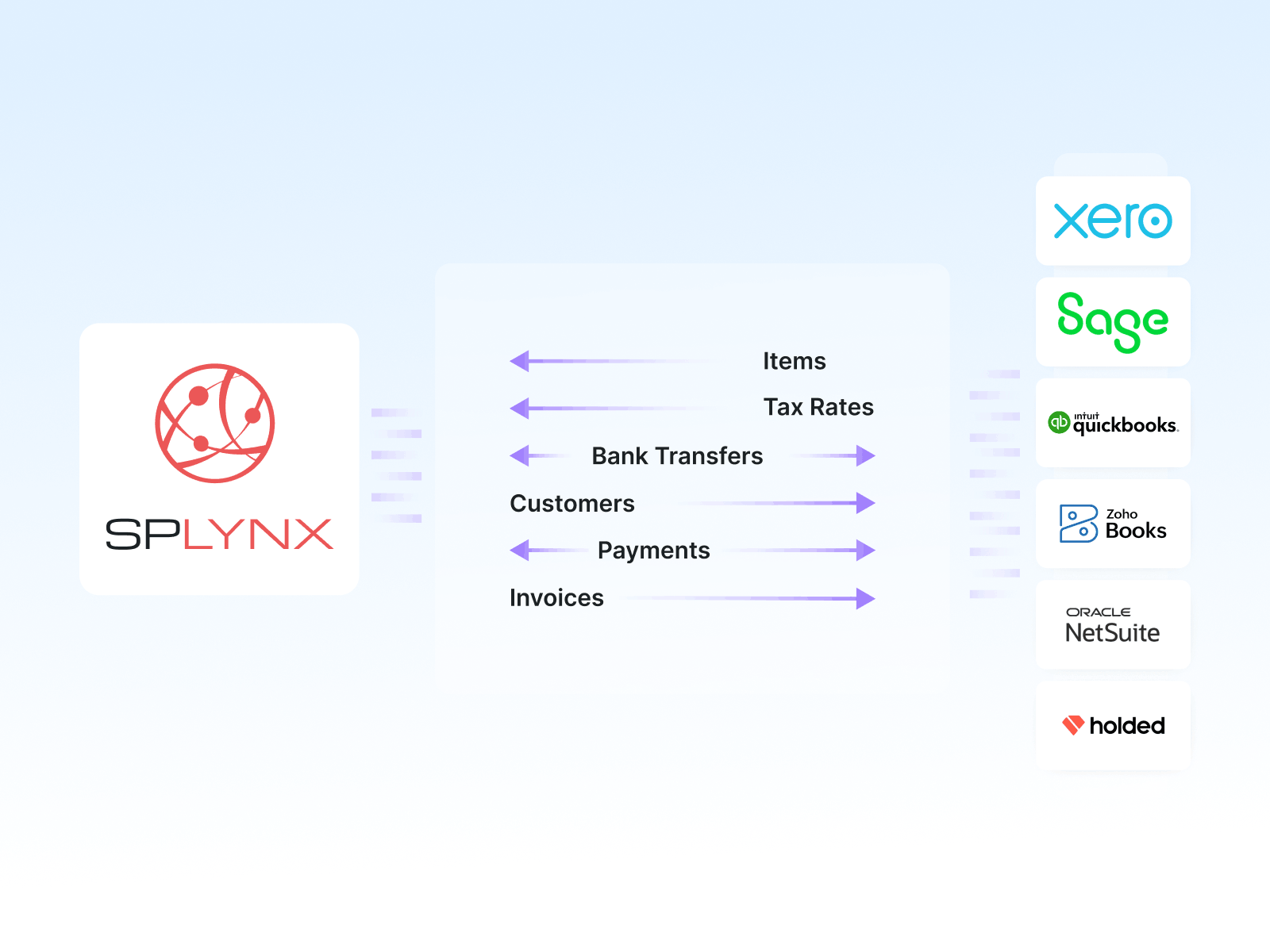
Bill subscribers on every continent
MIGRATION MADE EASY

Launch in weeks, not months

Deployment & migration assistance included

Launch in weeks, not months

Still questioning if Splynx is the right fit?

Let us prove it!

Book demo